
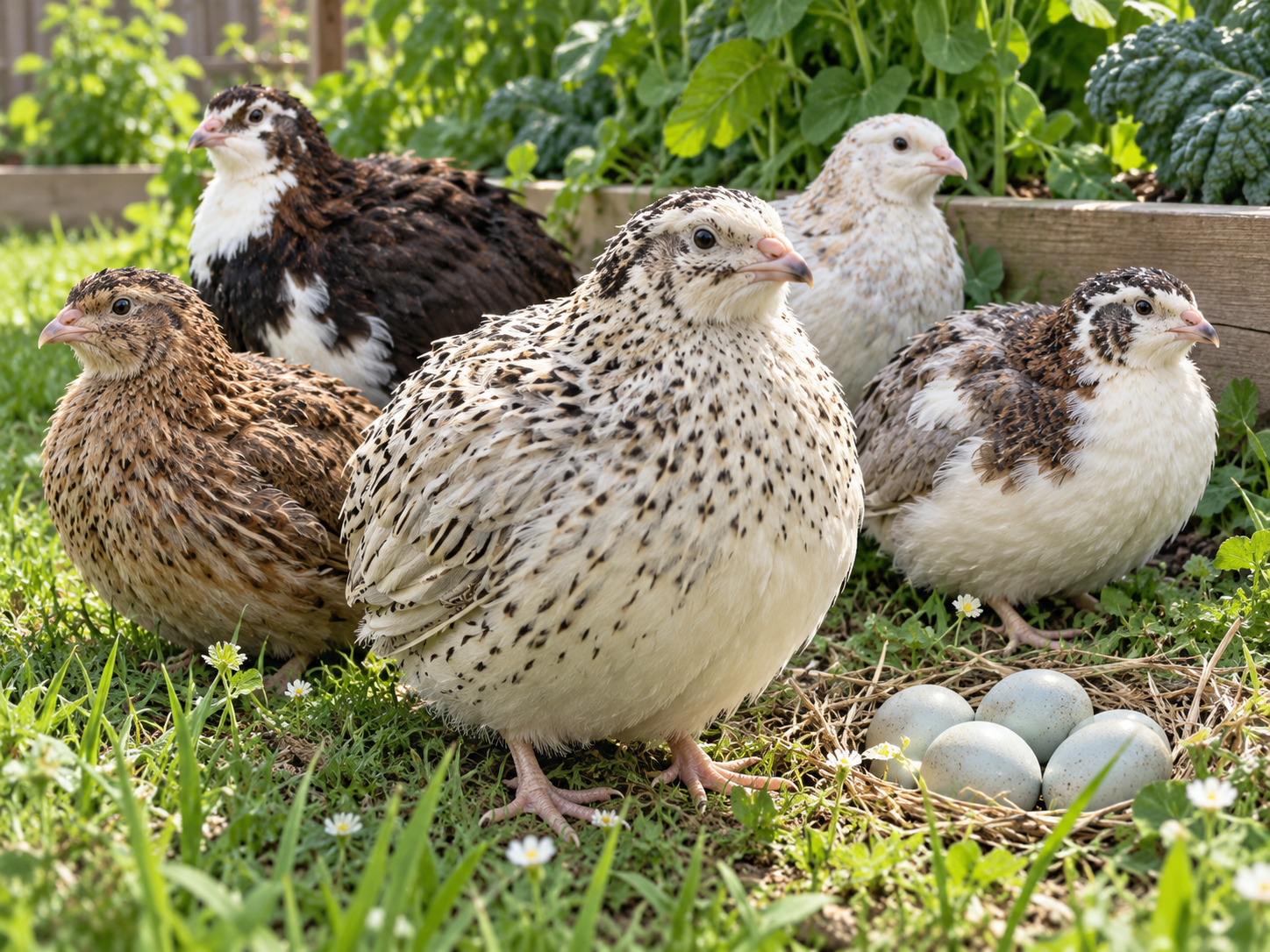
J&L Jumbo Celadon Coturnix are selected for both the recessive celadon blue-egg trait and larger body size. Our line includes a colorful mix of plumage such as white, Pharaoh, Tuxedo, Rosetta, and several shades of gray, so chicks from the same breeding program may look very different from one another. Hens expressing the celadon trait lay distinctive blue to blue-green eggs ranging from pale powder blue to deeper robin’s-egg shades, with some eggs nearly clear and others lightly speckled. The celadon trait affects egg-shell color independently of plumage color, while the jumbo designation reflects selection for larger mature body size.
Jumbo Celadon
Jumbo Celadon
Large-bodied blue-egg Coturnix quail in a wide variety of colors and patterns, including white, Pharaoh, Tuxedo, Rosetta, and gray-toned birds.
Egg characteristics
Hens expressing the celadon trait lay blue to blue-green eggs. Shade can range from pale powder blue to deeper robin’s-egg tones, and shells may be clear or lightly speckled. Celadon is a recessive egg-color trait and does not determine feather color. Jumbo lines may also produce somewhat larger eggs than standard Coturnix.
Temperament
Generally active, curious, and manageable like other Coturnix. Temperament varies by individual and breeding line.
Sexing
Depends on plumage. Because this line contains multiple colors and patterns, some birds may be feather-sexable while others are not. Pharaoh-patterned birds may show typical male/female breast differences, while white, Tuxedo, Rosetta, and gray-patterned birds may require vent sexing, crowing, or egg laying for reliable identification.
Care notes
Provide a quality game-bird or quail ration appropriate for age, clean water at all times, dry well-ventilated housing, and adequate space. Jumbo birds grow rapidly and benefit from good nutrition during development. Secure housing is important because Coturnix can flush vertically when startled.
Additional notes
Celadon is an egg-color trait, not a feather color, so birds from this line may hatch in many different colors and patterns. “Jumbo” refers to selection for larger body size rather than a separate color variety. There is no official universal jumbo standard, but a commonly used breeder benchmark is at least 80% of birds in that breeding line will reach 10 ounces by about 10 weeks of age.
Shop this variety
Browse the full shop →Jumbo Celadon availability
Choose the age, sex or hatching-egg option you need. Live pricing and availability stay connected to the same storefront engine.
Chicks · Unsexed
Preorder
Estimated ready around Nov 20
$5.00 / bird
Preorder / Pay
Unsexed Juveniles
Ready now
7 ready now
$10.00 / bird
Reserve / Buy
Adult Hens
Ready now
21 ready now
$20.00 / bird
Reserve / Buy
Adult Roos
Ready now
21 ready now
$10.00 / bird
Reserve / Buy
Hatching Eggs
Ready now
Fresh inventory available
$20.00 / dozen
Reserve / Buy