
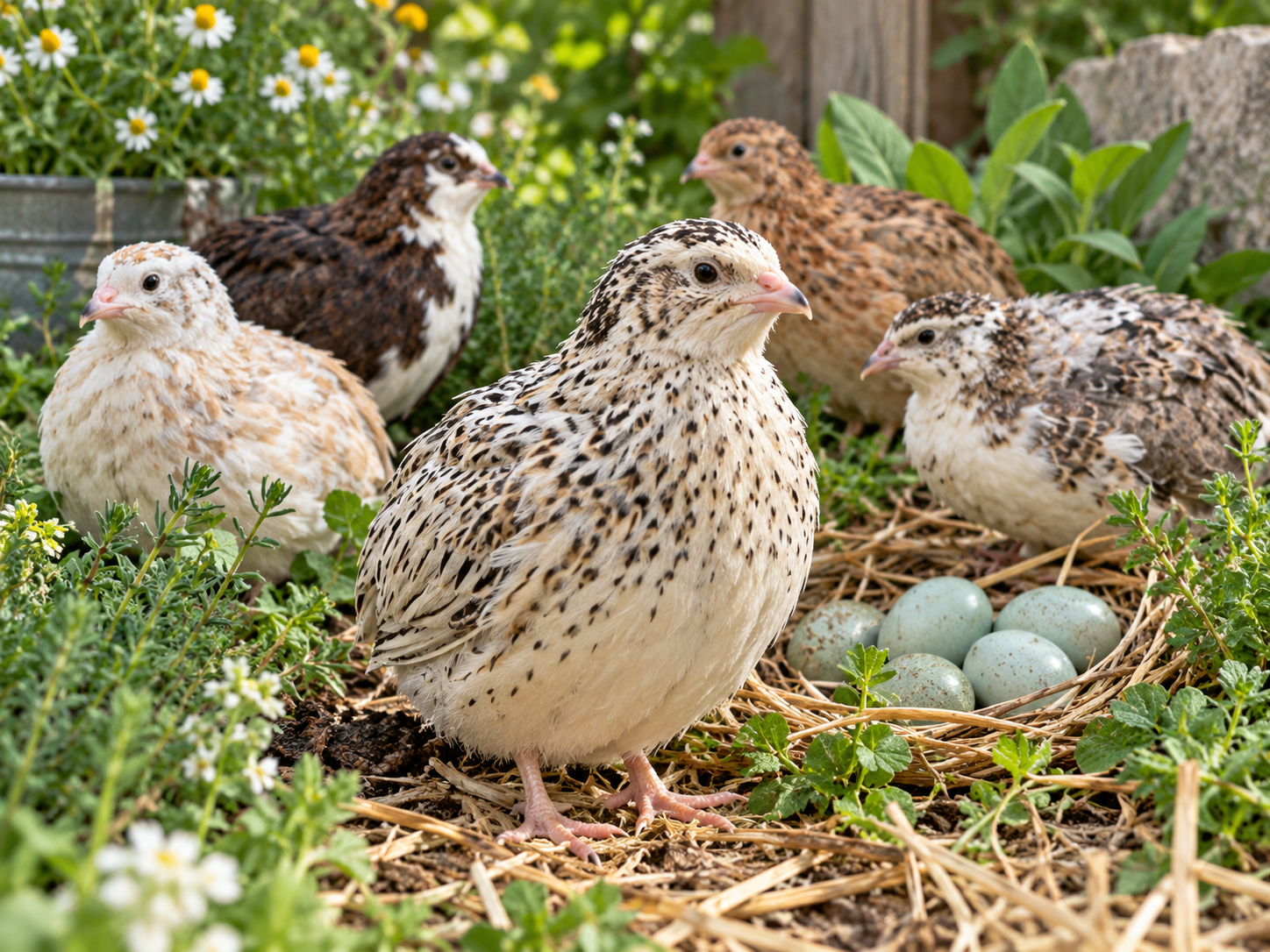
J&L Celadon Coturnix are selected for the recessive celadon blue-egg trait rather than for one specific feather color. Our Celadon flock includes a colorful mix of plumage such as white, Pharaoh, Tuxedo, Rosetta, and several shades of gray. Individual chicks may therefore look very different from one another even though they come from the same Celadon breeding program. Hens expressing the celadon trait lay distinctive blue to blue-green eggs, which may range from pale powder blue to deeper robin’s-egg shades and may be either lightly speckled or relatively clear. Celadon affects egg-shell color independently of plumage color.
Celadon
Celadon
Blue-egg Coturnix quail in a wide variety of colors and patterns, including white, Pharaoh, Tuxedo, Rosetta, and gray-toned birds.
Egg characteristics
Hens expressing the celadon trait lay blue to blue-green eggs. Shade varies from very pale blue to deeper robin’s-egg tones, and eggs may be clear or have brown speckling or mottling. The celadon gene affects shell color rather than feather color.
Temperament
Generally active, curious, and manageable like other Coturnix. Temperament varies by individual and breeding line.
Sexing
Depends on plumage. Because this Celadon line contains several colors and patterns, some birds may be feather-sexable while others are not. Pharaoh-patterned birds may show typical male/female breast differences, while white, Tuxedo, Rosetta, and gray-patterned birds may require vent sexing, crowing, or egg laying for reliable identification. One current Celadon breeder similarly notes that only some birds in a mixed-color Celadon collection are feather-sexable.
Care notes
Provide a quality game-bird or quail ration appropriate for age, clean water at all times, dry well-ventilated housing, and adequate space. Coturnix mature quickly and benefit from good nutrition during growth and breeding. Secure housing is important because they can flush vertically when startled.
Additional notes
Celadon is an egg-color trait, not a plumage color. Birds from this line may hatch in many different colors and patterns. Plumage appearance does not reliably indicate whether a bird carries or expresses the celadon gene.
Shop this variety
Browse the full shop →Celadon availability
Choose the age, sex or hatching-egg option you need. Live pricing and availability stay connected to the same storefront engine.
Chicks · Unsexed
Preorder
Estimated ready around Nov 20
$5.00 / bird
Preorder / Pay
Unsexed Juveniles
Preorder
Estimated ready around Dec 11
$10.00 / bird
Preorder / Pay
Adult Hens
Preorder
Estimated ready around Jan 1, 2027
$20.00 / bird
Preorder / Pay
Adult Roos
Preorder
Estimated ready around Jan 1, 2027
$10.00 / bird
Preorder / Pay
Hatching Eggs
Ready now
Fresh inventory available
$20.00 / dozen
Reserve / Buy